show sidebar & content

The listed Property Show

20 Feb 2012 / 0 Comments / in Uncategorized

During half term we took a well earned break and went to London to visit some friends.  We were pleased to be able to attend the Listed Property Owners Club event at Olympia where we saw a lot of friendly faces and discovered some great companies that work with historic buildings. 

Owning a listed property is not always health, wealth and happiness. Legislation, conservation and regulation can seem overwhelming and finding a decent builder or understanding the VAT rules can be enough to give you sleepless nights.  The listed property owners club is a great resource for help and advice and their website is helpful for clients and architects alike: http://lpoc.co.uk/

The Listed Property Show is a free event for select listed property owners, designed to offer all the advice you need under one roof.   It’s a unique opportunity for a stress free one-to-one session with working conservation officers who will happily talk you through any hypothetical plans that you may have about altering or extending your home. Alongside these officers are very experienced architects and planners, window and door manufacturers, craftsmen, and “caring” builders as well as the rather more prosaic experts in fire protection or insurance, all in one place for just two days in Central London.

A few people deserve a special mention, not least the lovely craftsman from Sandoft Roof tiles who lovingly crafted my son a clay elephant while he was demonstrating on the stand – better than a business card! http://www.sandtoft.com/

Another interesting product that caught my eye was solar slate who offer a photovoltaic slate with similar aesthetic properties to a normal roof tile, so much so that I could hardly see the solar slates from a distance.  We will definitely be looking at this product further for several of our projects in the southwest, in particular our community centre project in the centre of Exeter for which we are project architects.  http://www.solarslate-ltd.com/


Localism and planning in Exeter

15 Feb 2012 / 0 Comments / in Uncategorized

Changes to legislation through the Localism Bill will mean new challenges for architects and other consultants, but what will that mean for home owners living in Devon and Exeter?  Over the next few weeks we will look in more detail at what the reforms will mean to you as a client.

At present planning legislation consists of National planning policy, Regional Spatial Strategies and Local Plans.  Once the new legislation is brought in this will be streamlined with much reduced and condensed National Planning Policy and Local Plans.  This in itself has caused plenty of controversy with planners and architects claiming that the new National Policy is overly simplified and has removed a lot of useful guidance.  That said it has been written so that it can be read and understood by the general public with less jargon and a lot fewer words.

One of the most controversial aspects of the new legislation is the ability of local neighbourhoods to create their own plan, designating areas for housing and industry.  One important point to make here is that these new plans cannot prevent development, with the legislation come a pesumption in favour of sustainable development and an intention that planning should be done positively.  As a result the new neighbourhood plans must be carefully worded and promote development, not try to restrict it.  It could be said that this will be difficult for some to swallow with a tendency among more rural communities to try and restrict development.  Be warned however, without a neighbourhood plan the location of development will be decided by others.

So who can write a neighbourhood plan and what should it contain?  Towns or Parish Councils will form the starting point for most neighbourhood plans, however in cities or where there is no defined area a Neighbourhood Forum can be set up.  This needs to have a minimum of 21 people and will require a constitution – local community associations form a very good starting point for this – the Forum then needs to be accepted by the local Council.

A Neighbourhood plan can be as simple or complex as required, however more complex documents will require more input from consultants such as architects and planners, which means additional funding will be required.  Once completed the plans go through a process of independent examination to check that they conform with national policy and the local plan as well as human rights legislation.  Once this is done a local referendum will be called before the plan is adopted.  Neighbourhood plans will be valid for 5 years.

Several pilot schemes have been started across the country with plans locally being developed in St James’ in Exeter and Dawlish.

If your community is thinking of creating a local plan in Exeter, Devon or the southwest get in touch with Kirsty Curnow Bayley and Living Space Architects.  We would be only too happy to meet with you and discuss your options for creating a plan and how we might be able to help.

Eco-refurbishment re-visited

OLYMPUS DIGITAL CAMERA
07 Feb 2012 / 0 Comments / in Uncategorized

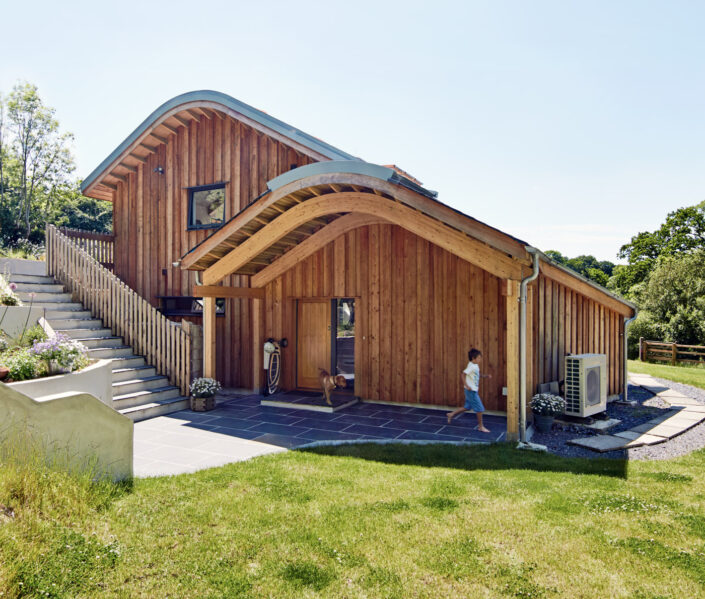
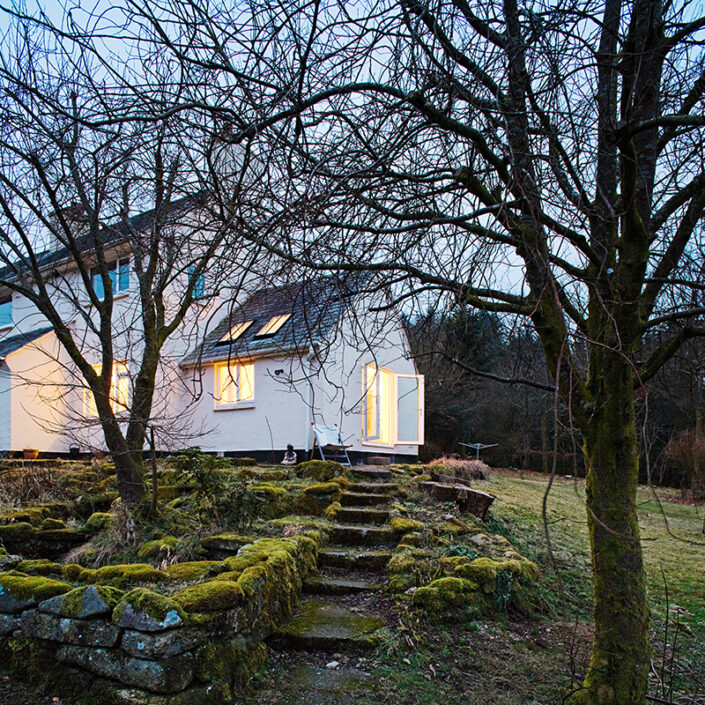
Sunrise is a house that we altered and refurbished in southeast Cornwall a couple of year’s ago.  We installed quite a bit of eco-tech and Stuart was curious to find whether the clients were pleased with the results now that some time has passed, so he went to see the client last week to take some photos and have a chat over a cup of coffee.

The house is looking great, much improved as you can see from the before and after pictures of the front facade! 

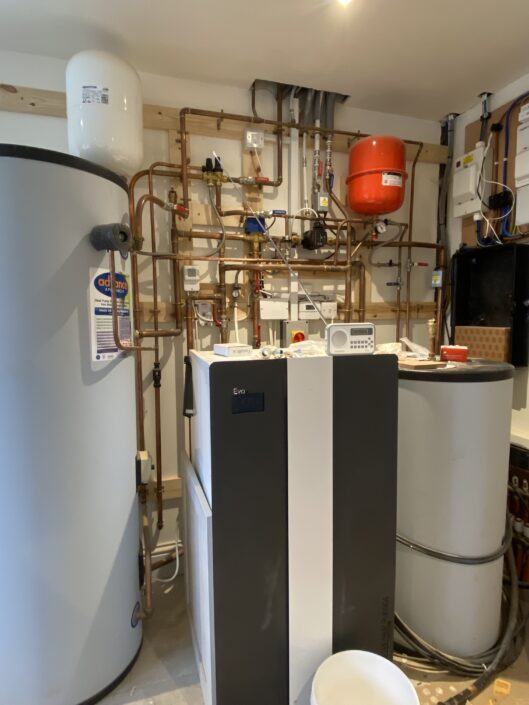
The heating system was completely replaced with a new air source heat pump which extracts heat out of the air and uses it to heat the house through low temperature radiators.  These are larger than normal radiators and have a small fan built in which helps the heat to circulate.  This system along with a woodburning stove makes the house toasty warm even on a freezing cold day, although below 3 degrees the air source heat pump does need a bit of extra help.

Our client reported a total annual energy bill of around £1000, which is increadable bearing in mind the project is a refurbishment and there were limits on what we could achieve.  As a result 2 of their neighbours have also installed the system and are keeping records of energy used so that we can get a better idea of the energy savings.

It was also great to hear that they are really enjoying living in the house, which is so much lighter and brighter with additional windows and rooflights added.  To add to the feel good factor they have a big tank under their lawn which stores rain water from the roof for flushing toilets and washing clothes.

If you are interested in how you can improve the energy efficiency of your home get in touch for a consultation.

The New Homes Bonus

23 Jan 2012 / 0 Comments / in Uncategorized

New Homes Bonus – Potential funding for community schemes

The New Homes Bonus is billed by the government as a powerful incentive for housing growth and is a key part of the housing growth focus of thier national strategy. It is based on the council tax of additional homes built within local areas and those brought back into use, with a premium amount for affordable homes, and paid for the following six years. The idea is that it ensures that those local authorities which promote and welcome growth can share in the economic benefits, and build the communities in which people want to live and work.

The New Homes Bonus commenced in April 2011, and will match fund the additional council tax raised for new homes and empty properties brought back into use, with an additional amount for affordable homes, for the following six years.

Provisional Allocations 2012-13

Housing Minister Grant Shapps announced the provisional allocations for 2012-13 last month and this has led to a flurry of interest from local community schems who could benefit from the money.

In his announcement Housing Minister Grant Shapps said:

“For years communities fought against development because they saw no evidence of how it improved their lives. Their experience of housebuilding under the old system top-down targets amounted to the wrong homes being built where they weren’t wanted, and their concerns about extra pressure on local services ignored” 

“So I’m delighted that after just one year of the New Homes Bonus this is now changing. There is a culture shift taking place across the country – communities going for growth are reaping rewards for their local area, and councillors are reporting that it is now much easier to lead a mature debate about the benefits of development”

“The bonus payments for new homes last for six years – so this year’s bonus is more than double the payment from year one, and it’s why communities that continue to welcome new homes can expect to see bigger cash bonuses and improved local services in the future”.

Provisional allocations for 2012-13 total £431m and Exeter will receive £389,165 for 2011-12

Full local authority allocations and on the online calculator are available below under ‘Related downloads’.

We are committed to ensuring that the Bonus remains a flexible, unring-fenced fund.  Local authorities are best place to understand the barriers to growth in their areas, the needs of their local communities and lead a mature debate about the benefits that growth can bring.

Background

The New Homes Bonus is based on past increases in housing supply. It is a powerful and simple incentive for housing growth, because it ensures that those areas which are growing have the resources to meet the needs of their new residents and existing communities. Local authorities are best placed to understand these needs and lead the debate about spending priorities. Wychavon have developed a protocol, whereby up to 40 per cent of the funding is spent by the community where the growth is taking place. While Dacorum are reinvesting the Bonus in further housing and business growth

The Department has set aside almost £1bn over the Comprehensive Spending Review period for the scheme, including nearly £200m in 2011-12 in year 1 and £250m for each of the following three years. Funding beyond those levels will come from formula grant. This ensures that the economic benefits of growth are returned to the local level .


New Year – New Home?

03 Jan 2012 / 0 Comments / in Uncategorized

With the news full of uncertainty in the financial markets many of us are choosing to stay put rather than sell our houses and move, but that doesn’t mean we can’t make the most of what we have and there are plenty of projects within all budgets that could make a real difference to your home without having to up sticks and move.  By making changes and improvements to your home not only can it make your property feel like new but it will also add value once the market improves again.

Adding and Extension

Adding extra floor area is a guaranteed way of making your home feel like new.

Not only is finance more difficult to find but moving home costs a fair bit of money too with stamp duty on a £500,000 home amounting to £20,000.  It’s these factors that have made staying where you are and extending a really good option.

“It’s true that it can be more difficult to make a big profit now on any work that you do to your home, but you will more than likely get back what you spend” says Kirsty Curnow Bayley at Living Space Architects. “In some cases, especially with homes at the top end of the market you can create a good extension for the same price as moving”.

Rear and Side Extensions


This is the most popular type of extension, often opening up to the garden at the rear of the property with the kitchen diner leading onto the garden.  Families are looking for space where they can all be together that connects better with the garden and this will definitely add value to your home.  Expect to pay in the region of £1500- £2000 per square metre including fit out.  Consider employing an architect for the project, although it will add around 10-15% to your project the extra spend is definitely worth while; architects are space planning experts and will make sure you get value for your money.  They will also help you negotiate the planning maze and can manage building contractors to help ensure a project is on time and within budget.

Loft Conversions

A loft conversion will cost in the region of £40,000 and is a great way to get another bedroom and can be a good option if your family is expanding but you don’t want to move.  You may not need planning permission for a loft conversion although it is important to check that your house still has it’s permitted development rights before you start work.  Always contact your local planning authority to check or speak to an architect who will be able  confirm how big your extension can be to comply.

Basement

Adding a basement is one of the best options if your priority is to gain extra space as you can effectivly gain a whole extra floor.  You can draw in extra light by adding a lightwell and extending into your back garden.  Compared to an extension at ground level a basement is a more expensive option with costs of up to £3000 per square metre and can be disruptive.  Make sure you employ a good architect before you start to make sure your basement is as light and airy as possible.

Sun room


The traditional upvc conservatory extension is a bit of a quick fix solution and many people regret not having considered other options.

Again a small conservatory may not need planning permission and it is worth checking before you start.

When planning your sun room think about its orientation – south facing sun rooms are great but you do need to consider how to avoid overheating.  You can create a sun room with a solid roof and rooflights to help control temperatures whilst still letting in light.  Large roof overhangs can provide solar shading and some protection from summer showers.

Sliding folding doors are now extremely popular but large slim framed aluminium sliding doors are becoming more popluar as they give the best visual connection with the garden and look a lot more stylish.

New Homes Bonus could fund Community Centre

05 Dec 2011 / 0 Comments / in Uncategorized


Newtown Community Association (NCA) could soon have a new building due to funding soon to be released through the New Homes bonus.

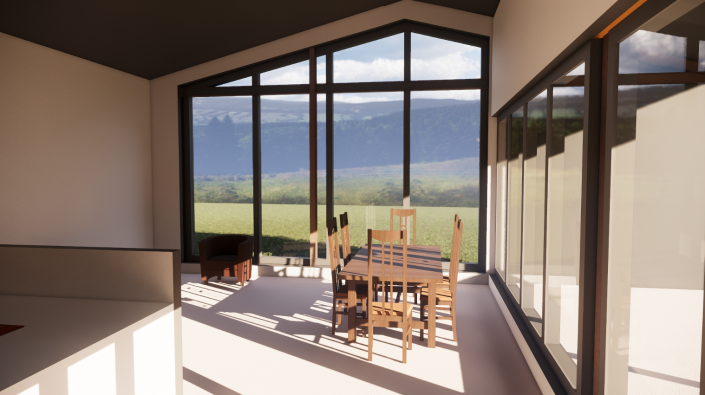
The Community Association based in Belmont Park in Exeter has been drawing up plans for a new facility, which will be an exemplar of sustainable passive technology and provide the local community with a much needed updated facility for local clubs and groups to meet.

The NCA have been working with Exeter based Living Space Architects to create a Vision for the scheme which will shortly be submitted for planning permission.

Kirsty Curnow director of Living Space Architects said: “We have been working hard with the community to create a building that meets their needs and uses as little energy as possible and the NCA are delighted that the council may be able to provide some of the funding that is required to make the scheme viable”

Background

The New Homes Bonus is based on past increases in housing supply. It is a powerful and simple incentive for housing growth, because it ensures that those areas which are growing have the resources to meet the needs of their new residents and existing communities. Local authorities are best placed to understand these needs and lead the debate about spending priorities. Wychavon have developed a protocol, whereby up to 40 per cent of the funding is spent by the community where the growth is taking place. While Dacorum are reinvesting the Bonus in further housing and business growth

The Department has set aside almost £1bn over the Comprehensive Spending Review period for the scheme, including nearly £200m in 2011-12 in year 1 and £250m for each of the following three years. Funding beyond those levels will come from formula grant. This ensures that the economic benefits of growth are returned to the local level .

See related press notice and written ministerial statement  in top right hand corner of this page. 

The New Homes Bonus: final scheme design was published on 17 February 2011 (see Related Publications below).

Further information

For further information contact Kirsty Curnow Bayley at Living Space Architects www.livingspacearchitects.com


Time to retreat to Dartmoor

_MG_7398
01 Dec 2011 / 0 Comments / in News, Uncategorized

From time to time we all feel the need to escape, to get away from the pressures and information overload that is now so much our modern lives with a chance to relax and recharge.  For many the answer is a summer holiday somewhere hot, but there is an alternative on offer right on our doorstep.

 Bala Brook Retreat Centre near South Brent offers visitors the opportunity for quiet reflection, and with little mobile phone reception, it really is possible to escape from the barrage of media advertising, endless stream of emails.

On arriving at the centre you are struck by a sense of peaceful calm and tranquillity, not surprising for a site that is dedicated to the practice of meditation and contemplation. Tucked into the valley on the edge of Dartmoor, ‘Bala’ is the name of the Brook that pours down the edge of the property into the Avon, in Celtic it just means stream of water but the Sanskrit term ‘bala’ refers to the power that helps us generate spiritual energy.

Previously the home of the Golden Buddah Centre Bala is now owned by the Spanda Trust who also own Harbour House in the Centre of Kingsbridge. The Trust is a charitable foundation dedicated to preservation of nature, human healing and education by Yoga, meditation and appreciation of nature – something that sits well with the Retreats location within Dartmoor National Park.

The centre has proved extremely popular and visitors range from groups of Buddhist monks to artists and city workers wanting a break.  Although the Centre was extremely popular the existing accommodation wasn’t designed to work as a retreat – originally built as a family home and extended bit by bit over the years, it was difficult to manage and impractical to use, feedback from visitors suggested that changes should be made.

Living Space Architects who are based in Exeter were appointed to work with the Trust to create an annex to the centre to replace the existing stable block, which was being used as extra bedrooms when the centre was busy.

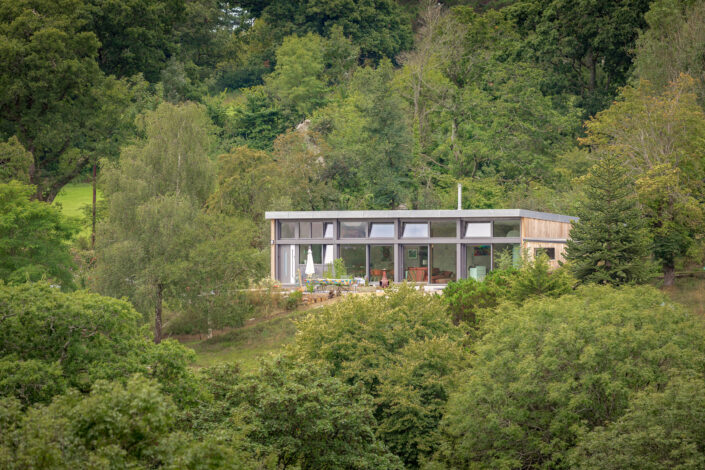
The new building has a real sense of place sitting well in the landscape amongst the mature oak trees, with its timber cladding a reclaimed slate roof. The new art studio, which is also used for yoga is glazed around 3 sides with well insulated glazing panels,  and allows guests to paint or meditate looking out onto the brook and beautiful wild flower garden.

 “We created a new building with a stunning studio space and moved the manager’s office out of the existing house allowing guests privacy and quiet (some of the retreats are silent for their duration).  It also provides additional space when the centre is busy.” said Kirsty Curnow Bayley, architect for the new building.

The timber frame is packed full with insulation and solar panels have been installed on the roof, which along with a wood burning stove provide the heating required.  It was always the intention of the Trust to keep the energy usage of the building to a minimum, and the position of the building near to the Brook means that in the future power could also be produced using a small scale hydro-electric generator.

One of the most important parts of the brief was to create a flexible building, which could change over time if required. The structural system with large timber trusses allows partition walls to be moved in the future if the needs and space requirements of the centre change.

“Buildings need to be adaptable to meet future needs and requirements.  Constructing new buildings uses a huge amount of energy and it seems only right that we should consider how they can be more easily ‘recycled’ and not just demolished and re-built” says Kirsty

A back gate leads out through the woods along the brook and onto the wide open Moor.  An exhilarating walk Northwards brings walkers to Princetown in the centre of Dartmoor. Or another walk westwards leads to the famous ancient oaks at Piles Wood alongside the exquisite river Erme.

So if you crave an escape from the stresses and strains of the day or are looking for a way of feeding the soul, Bala Brook Retreat Centre offers both within the wonderful surroundings of the Dartmoor landscape.

Meeting the Woodcraft Folk

24 Nov 2011 / 0 Comments / in Uncategorized

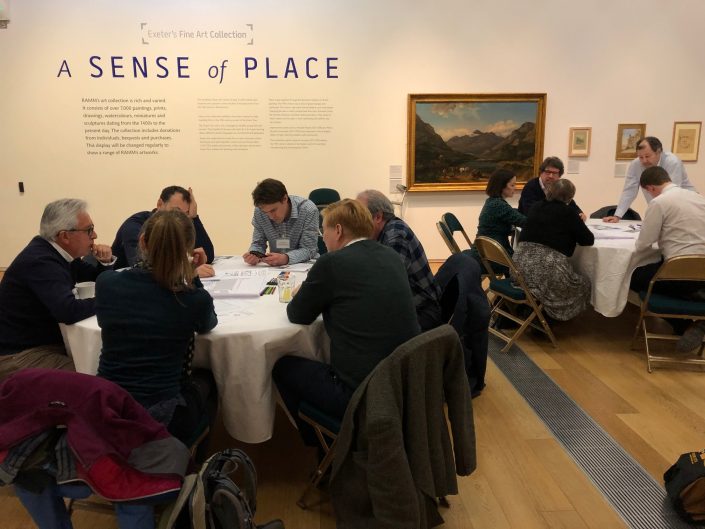
While we’re working in the design for Newtown Community Centre we’ve been trying to talk with as many of the users as we can and I was lucky to be invited to present to the Woodcraft Fold District meeting yesterday to present our scheme.

I have to admit Woodcraft Folk is not a group I had come across before, but I thought I should do a bit more research as they use the hut more than any other organisation.

http://www.woodcraft.org.uk/

So for those of  you like me that don’t know much about them they are a movement for children and young people, open to everyone from birth to adult. We offer a place where children will grow in confidence, learn about the world and start to understand how to value our planet and each other.

Woodcraft Folk runs on the passion and energy of thousands of volunteers, most of whom help at a local Woodcraft Folk group and who may have been in Woodcraft Folk as children, or whose own children may attend a group. With the support of regional and central resources, local Woodcraft groups decide their own programme and co-ordinate their own events and camps. Young people take an increasingly active role in planning and leading their own activities, and helping with District co-ordination. 

Whilst sharing many of the same historical roots as the Scouting movement, The Woodcraft Folk’s direct antecedent was the Kindred of the Kibbo Kift, an organisation led by ex-Scout Commissioner for Woodcraft and Camping John Hargrave, who had broken with what he considered to be the Scouts’ militaristic approach in the years immediately after the First World War. The Woodcraft Folk was established by Leslie Paul in 1925 after the south London co-operative groups challenged Hargrave’s authoritarian tendencies over his refusal to recognise a local group called “The Brockley Thing” and broke away from the Kindred. In its early days it was very similar to the Kibbo Kift, with a strong pagan and anti-capitalist emphasis, but gradually developed its own distinct ethos.

The name ‘Woodcraft‘ was used by the influential writer and naturalist Ernest Thompson Seton at the turn of the 20th century when setting up the American proto-Scouting organisation Woodcraft Indians, and in this context meant the skill of living in the open air, close to nature.

I was pleased to meet the Exeter Woodcraft Folk and hear their views about what we had designed so far.  They were really positive about the project and gave me some helpful sugestions about how they might use the space.  I hadn’t considered all of the implications of running a club with 20 11 year olds running around the centre one day and 20 3 year olds the next!  Design is definitely a process and it’s a lot easier when you get to talk to the people that will actually use your building.

Barns

Irish House 1
22 Nov 2011 / 0 Comments / in News, Uncategorized

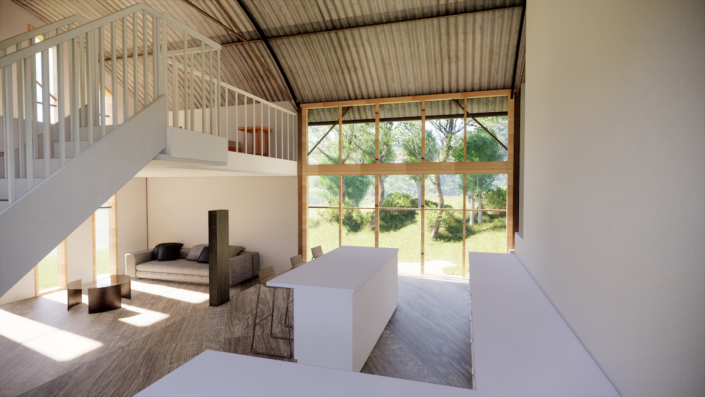
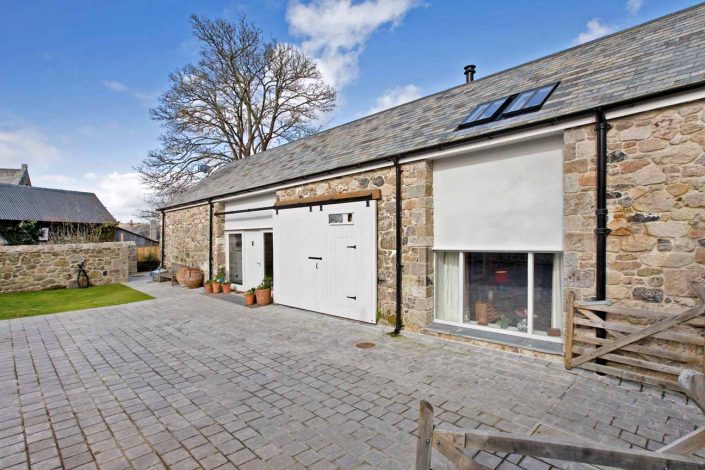
Today we’re enjoying looking at barns in the office, we were plesently surprised to find out that some of the barns we like had even been listed.  Pictures are of a beautiful barn in Dunsford near one of our new projects and a gorgeous house in Galway by Richard Murphy Architects.

Living Space Architects Launch New Website

18 Nov 2011 / 0 Comments / in Uncategorized

We’ve been working hard over the last few weeks creating our new website.  Let us know what you think, we’ve created it in wordpress using a theme by web designer Kriesi and we’re really pleased with it.  Over the coming months we will be adding to our blog to keep you up to date with Living Space News.