Posts

An Article by Jamie Crocker for Drift Magazine

Living Space are a Chartered RIBA Practice based in Exeter, established 20 years ago by Kirsty Curnow-Bayley and Stuart Bayley. Along with their team, they have a passion for creating beautiful, well-designed, sustainable homes, also working extensively with charities and housing developers. Specialising in energy-efficient design for both new and existing buildings, Living Space possesses particular expertise in Passivhaus and Heritage Conservation.

The story really took off in 2004, when the team moved to the coastal city of Plymouth with a clear and ambitious plan: to establish a young and contemporary architectural design practice that was forward-thinking, innovative, and deeply in tune with space and environment. This vision brought about Living Space, an architectural fi rm committed to creating designs inspired by their surroundings and harmonious with the natural world.

Twenty years have passed since that pivotal moment, and the practice now has an established office in Exeter with work spread across the Southwest from Cornwall, through Devon and into Somerset and Dorset.

From the outset, Living Space’s mission has been to craft contemporary architecture that not only suits its site, history, and environment but also, and most crucially, meets the specific needs of its clients. The team thrives on problem-solving and relishes collaborative efforts with clients and consultants to discover the optimal design solutions.

As the years have progressed, Living Space has honed its focus on sustainability, heritage, and conservation, finding the intersection of these elements particularly exhilarating. The firm subscribes to the belief that “the most sustainable building is an existing building.” They find great satisfaction in assisting clients to make their buildings relevant to modern life while preserving the unique features that initially attracted them to the property.

A significant advantage for Living Space is the presence of both a qualified RIBA Conservation Architect and a certified Passivhaus Designer on their team. This unique combination enables the firm to provide top-tier advice on upgrading historic and listed buildings, helping clients reduce energy costs while maintaining historical integrity. Many of Living Space’s projects involve clients who have recently acquired listed buildings or older properties with solid walls that they wish to modify and extend. These projects are particularly rewarding for the team as they offer opportunities to enhance existing structures without compromising their historic significance or distinctive features. Common client requests include maximising natural light, optimising views, and incorporating modern amenities such as en-suite bathrooms and open-plan living spaces.

One notable project that exemplifies Living Space’s expertise is the transformation of Staddons House on Dartmoor. Here, the team significantly altered the house layout, upgrading it to meet modern family living standards while preserving its historical essence. Collaboration with an archaeologist provided a thorough analysis of the existing layout, distinguishing between original Medieval longhouse elements and later Victorian additions.

This meticulous research allowed for the removal of the existing staircase and the creation of an open cross passage, highlighted by a contemporary staircase. The redesign included opening up the space to reveal the original cruck frame, blackened by centuries-old smoke, and adding a small roof light to flood the area with natural light. Despite the challenges and extensive negotiations with the Conservation Officer, the project garnered an award from the Devon Historic Buildings Trust and resulted in a stunning family home.

Living Space has a portfolio of projects where they have completely transformed existing houses to better utilise their locations. A personal favourite is the conversion of a mid-century bungalow in Lympstone, Devon, into a strikingcontemporary home. The project involved a complete roof rebuild, resulting in a design that appears as a large dormer within a pitched roof space due to sensitive setting and planning constraints. The first-floor open-plan living rooms create a loft-style space with breath-taking views of the landscape.

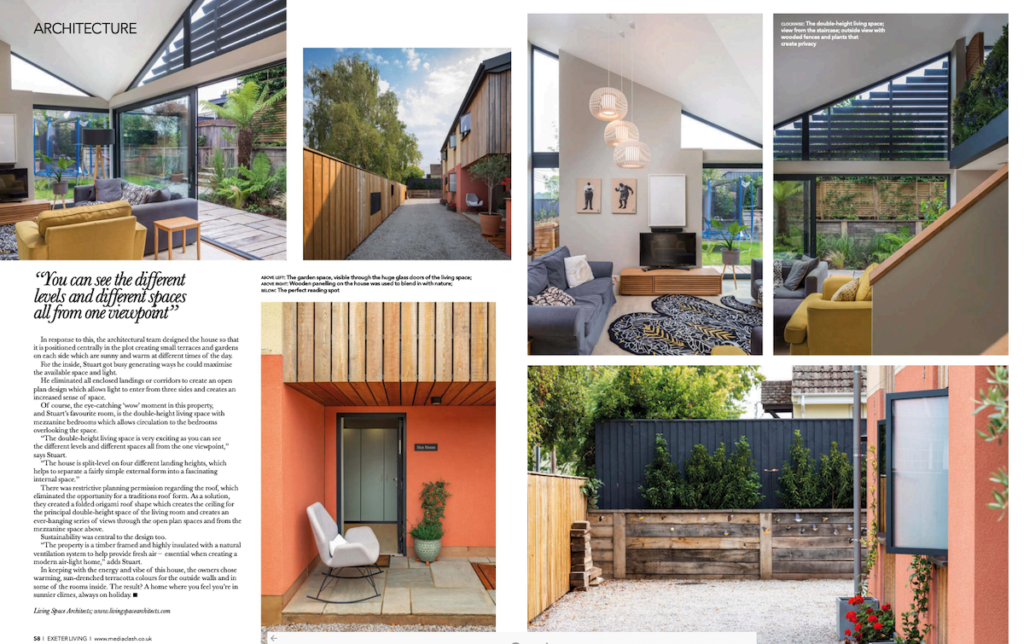
The firm’s expertise extends to designing new homes, informed by their experience with sensitive locations and listed buildings. A standout project in this regard is a new house in Dunsford, builtin the grandparents’ garden for a family who had struggled to gain planning consent with a previous architect. Living Space’s involvement, alongside a planning consultant, led to a more sensitive design scheme. The house, which feels as if it has organically grown from the landscape, features laminated timber beams from Buckland Timber in Somerset and a locally supplied green roof. The use of natural materials throughout results in a modern yet gentle structure.

Although Living Space has constructed numerous new homes, the firm has noticed a significant shift in the architectural landscape. The trend towards knockdown and rebuild projects is waning, replaced by a more sustainable approach focused on adapting and reusing existing buildings. This shift helps reduce the carbon footprint of construction projects and aligns with a broader trend towards material reuse and recycling. Living Space actively encourages clients to consider reclaimed bricks and recycled structural elements, which not only reduce carbon emissions but also imbue projects with unique character and history.
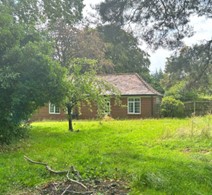
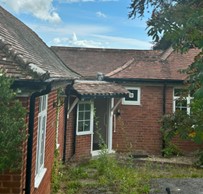
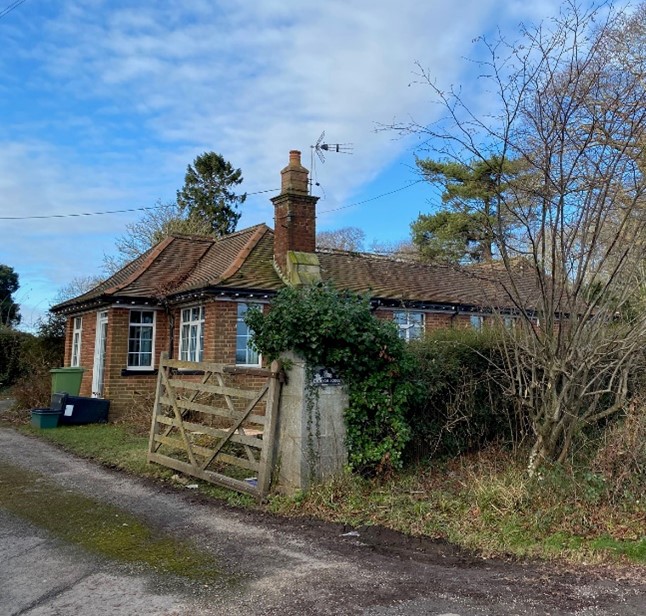
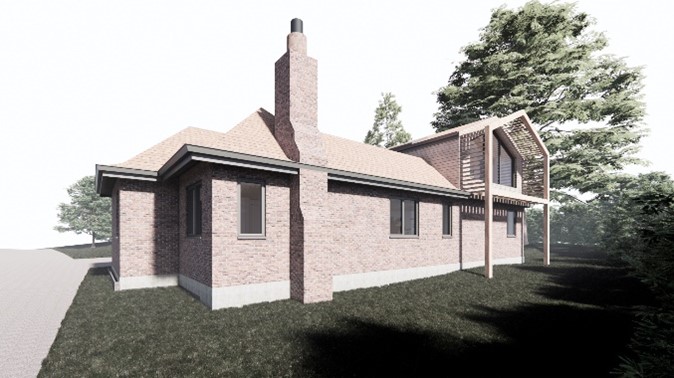
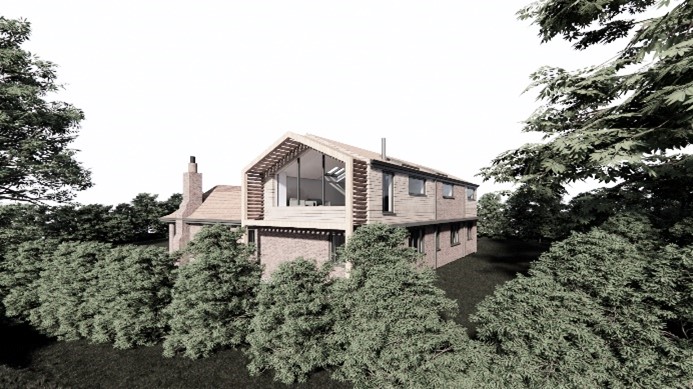
Nestled along the picturesque banks of the River Exe lies Exeleigh Lodge, a hidden gem waiting to be rediscovered. What was once a charming but tired bungalow is about to undergo a remarkable transformation into a contemporary riverside haven for a young family. Join us on this captivating journey as we unveil the story behind this exciting first floor extension project that promises to breathe new life into Starcross.


Discovering Potential

Exeleigh Lodge captured the hearts of our clients with its idyllic location and breathtaking river views. Situated on the tranquil south coast of Devon, this sprawling property boasts a canopied garden and easy access to Exeter and the Torbay area. Despite its enchanting surroundings, the lodge required some TLC to fulfil its potential as a modern family home.


A Collaborative Vision

We were entrusted with the task of retaining the lodge’s character, while infusing it with contemporary flair. From the outset, collaboration was key as our clients shared their vision through Pinterest boards, paving the way for a truly bespoke design journey. Led by Ellen, our PassivHaus Designer and architect, and Kirsty, our conservation accredited architect, our team embarked on a creative exploration to marry tradition with innovation.


Navigating Challenges

The journey wasn’t without its hurdles, with the lodge’s proximity to a listed building on the Powderham Estate presenting a unique set of challenges. However, with expert guidance from a planning consultant, input from ecologists and arboricultural surveyors, and enthusiastic input from our clients, our proposals struck the perfect balance between preservation and progress.


Designing for Tomorrow

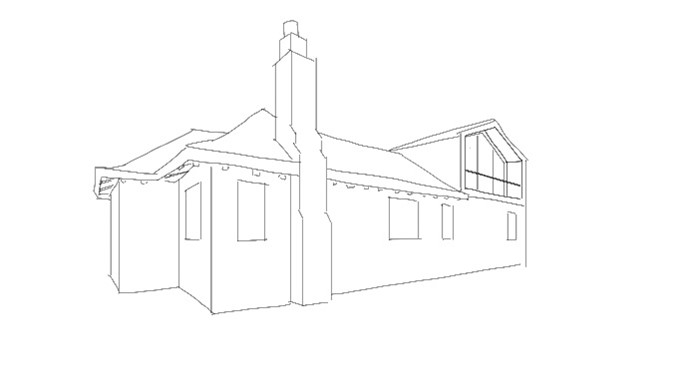
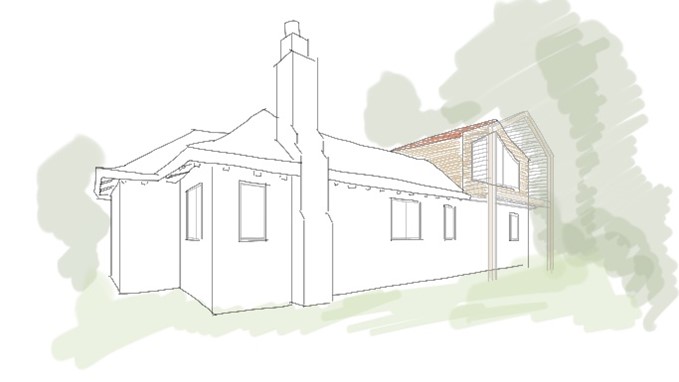
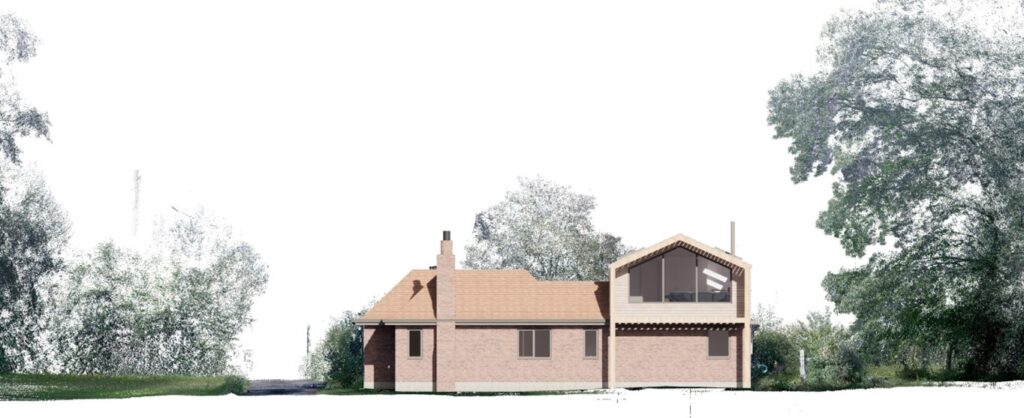
The culmination of our efforts is a sleek, pitched roof extension that seamlessly integrates with the existing structure. Featuring a spacious family room with panoramic estuary views, a cosy wood-burning stove, and eco-conscious elements such as solar shading, a PV array, and triple glazing, the design reflects our clients’ commitment to sustainability and comfort.


Success in Planning

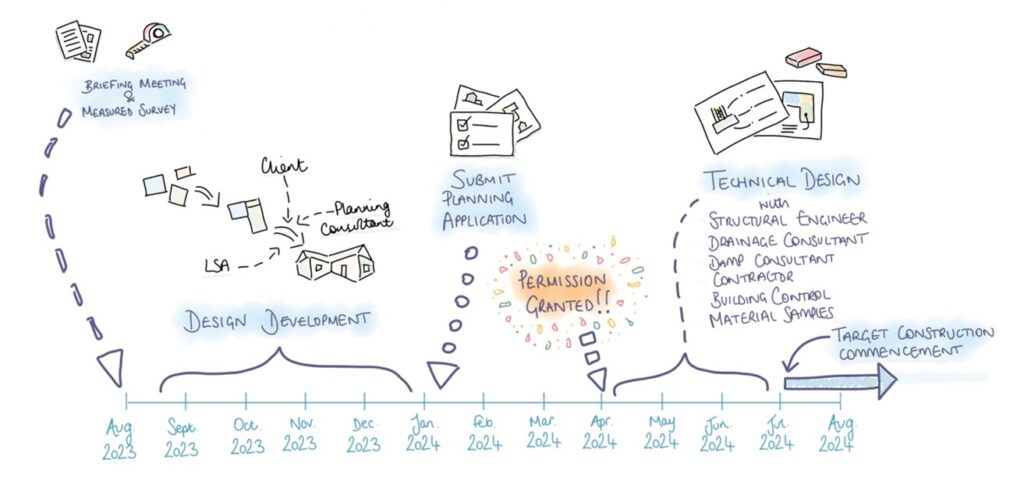
Planning applications are never straight forward, even with the best design, however we always stay in touch with the planning authority to enable discussion and a more collaborative approach. Approval came swiftly and seamlessly, which was helped by the clarity of our drawn information that enabled the planners and conservation officer to understand the scheme. The project is now on site and the hard work has begun to realise our clients vision of a home overlooking the river.


Looking Ahead

As we eagerly prepare for the next chapter, our focus turns to bringing the design to life. Technical drawings are underway, signalling the start of construction this summer. Keep an eye out for our signboard as you wander along the riverside, and join us in celebrating the rebirth of Exeleigh Lodge – a testament to the power of vision, collaboration, and the unwavering dedication to creating home that capture the imagination and inspire generations to come.

Wow! The end of 2023 and beginning of 2024 has been busy for us here at Living Space Architects, and despite our best intentions, we could not keep up with the Blog Posts recording Ellen’s progress through the training for the PassivHaus Designer course.

2024 has bought excellent news for Ellen and the team at Living Space Architects, passing the exam with flying colours and confirming Ellen’s status as a fully qualified PassivHaus Designer!

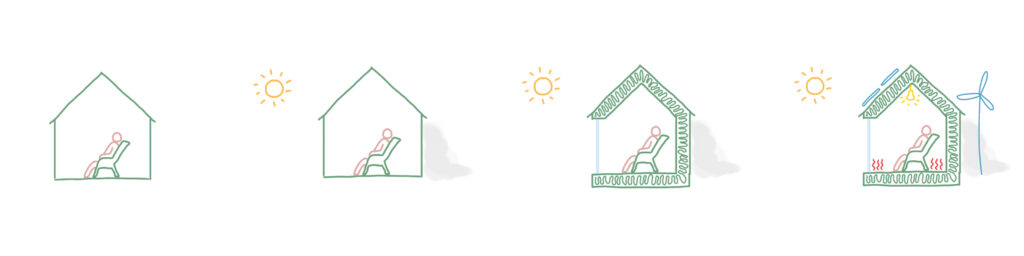
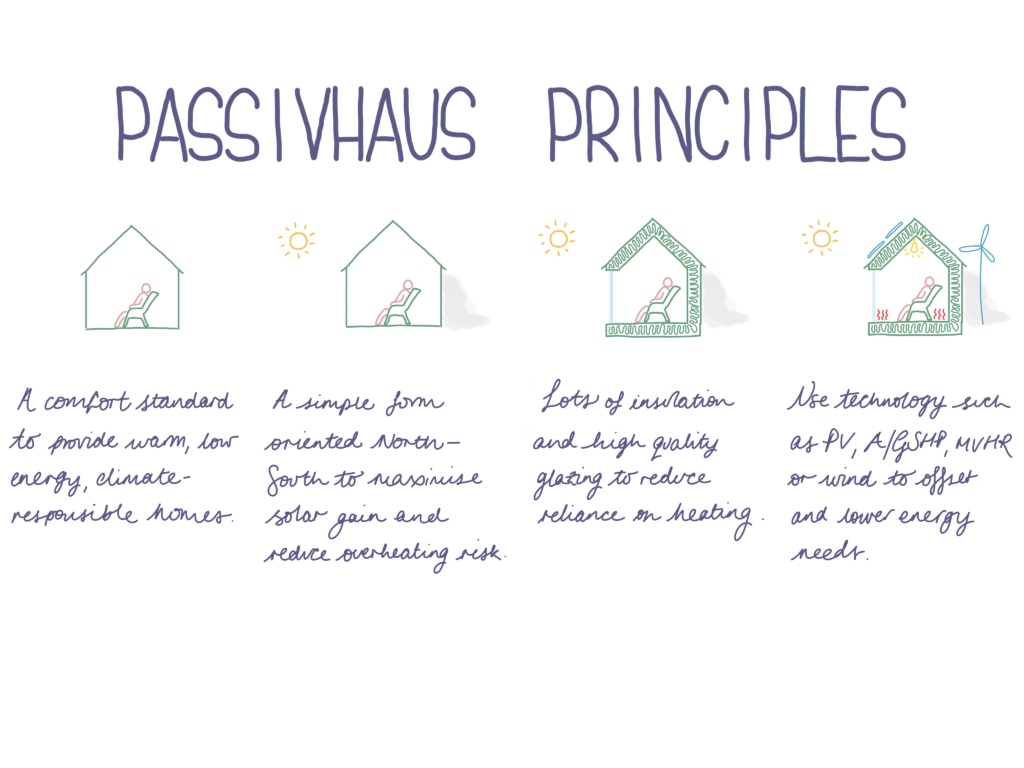
What is PassivHaus?

What does this mean for our clients?

Ellen is now qualified to provide the expertise required to realise your PassivHaus aspirations. Whether you are looking to uplift your project’s eco status, or take it to the next level of comfort with a PassivHaus, we are here to help you.

So are you dreaming of a low energy, high performance, comfortable home with low heating bills? Get in contact to start your PassivHaus journey!

One thing about beautiful, historic houses is that they can often be really, really cold.

As Brits, we are no strangers to wacking on the fire and arming ourselves with fluffy socks and a hot water bottle, but what happens when this simply isn’t enough?


When our client came to us with a brief to create a sustainable and well-insulated home in Broadhembury, we stepped up to the challenge.
They were concerned that it wouldn’t be possible to insulate the existing solid cob and stone walls, which were a large part of the property’s character and charm.

The property wasn’t listed so there was a bit of flexibility on altering the existing fabric, and with our experience of improving the energy performance of existing buildings and working with listed and historic properties, we were well placed to be able to advise.

This time however we wanted to take things a step further. How could we integrate technology usually used when designing new low energy homes on a historic solid wall building?


The emphasis was on creating a living breathing house with natural materials to improve the indoor air quality and create a natural, healthy home.

We suggested bringing on board Ann-Marie Fallon, a certified Passivhaus designer, to model the existing house using PHPP software. This is a time consuming business and involves the input of a lot of data to model the way the house performs now and how it would change following adaptations such as the addition of insulation.

This enabled us to investigate how we could insulate the property and best improve on its energy performance through the type of insulation, its position (internal or external) and thickness. The software also helped us check that no condensation would occur, which is a common concern when insulating solid walls.

The existing walls were a real challenge being constructed of a mixture cob at low level and solid stone at first floor. There was a lack of existing data available for the thermal capacity of cob, and Anne-Marie had to approach the BRE to find information to create her model.  This was then used to predict how the house would behave with added insulation and calculate the potential energy savings.  Using this data we calculated the optimum thickness of insulation to give our client the best energy saving at the most economical price, without compromising the historic fabric.


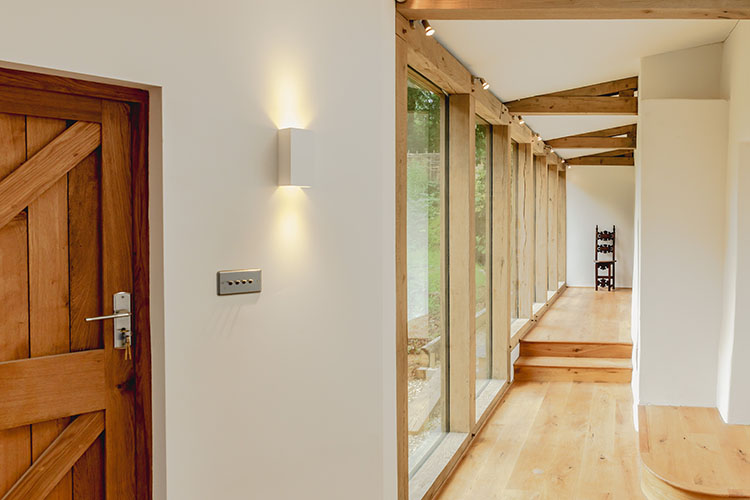
Our client was also keen to use triple glazing, and we agreed that it did offer worthy benefits for this project, although came at a higher price. We decided to use triple glazing on the north facing link corridor and high performance double glazing throughout the rest of the house. Drafts in older houses are one of the biggest issues for improving energy efficiency, so replacing the windows made a significant difference to the performance of the house.

For the walls, breathable wood fibre insulation was used internally on the first floor where there was a mixture of cob and stone.  This had to be extended along the internal partition walls to prevent thermal bridging and condensation.  Part of the existing house was built in the 1970’s and had a cavity wall construction.  Here we used the wood fibre insulation externally.

The existing cement render was removed from all walls to enable them to breathe and lime render with small pieces of insulating cork used as the external finish to the older parts of the house, with a more standard lime render in other areas. Additionally, a new heating system was installed throughout powered by a wood pellet boiler and new underfloor heating laid in the new extension.

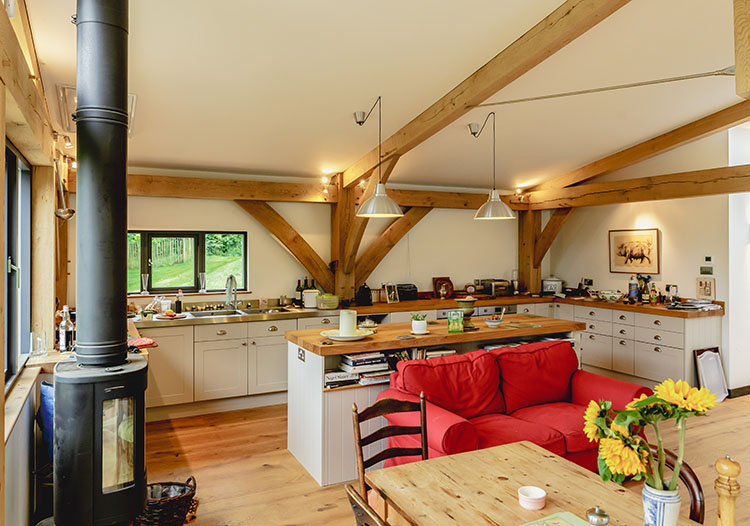
The design of the extension used an oak frame supplied by Carpenter Oak, which was wrapped in an airtight membrane and rendered in lime externally.  This gave a stunning interior space for the kitchen dining room and beautiful spaces where the ‘old meets new’ in the north facing corridor.


So if anyone tells you that an old house can’t be made warm and cosy, while retaining its historical charm and sustainable vision then send them our way!

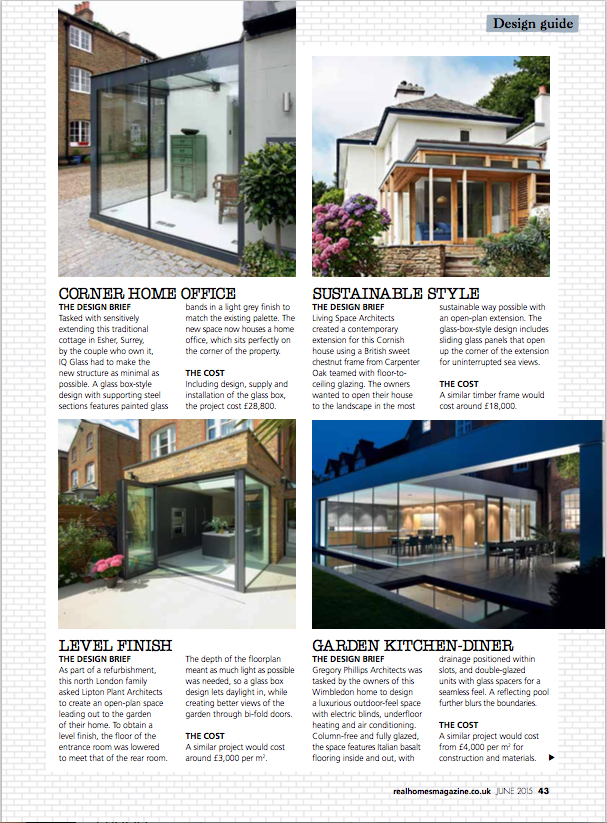
Our beautiful house extension and refurbishment project in Grey Wings, Cornwall has been featured in the ‘Design Guide’ for Real Homes Magazine under ‘Sustainable Style’.

This was a wonderful project to be part of, and we worked with obsessive detail to make the property the best it could possibly be.

The result was a highly sustainable and innovative design, embraced the stunning views and location of the property in a contemporary, stylistic manner.

To read more about the design, and see more pictures of this impressive extension, click here.

real_homes_logo


Screen Shot 2015-06-10 at 11.02.08

Portfolio Items